Mining

MINING & CONSTRUCTIOn VIETNAM 2026

The International Exhibition on HVAC, Refrigeration
and Smart Building Technologies in Vietnam

5-7 nov 2025

HALL B, SECC, HCM

Saigon Fair and Exhibition Center

Event statistics

Statistics update until 2026

0

Gross Spanning Area

100 +

Gross Exhibitors From
a

0 +

Gross International Group Pavilions

0 +

Gross Countries/ Regions

Video Summary of events

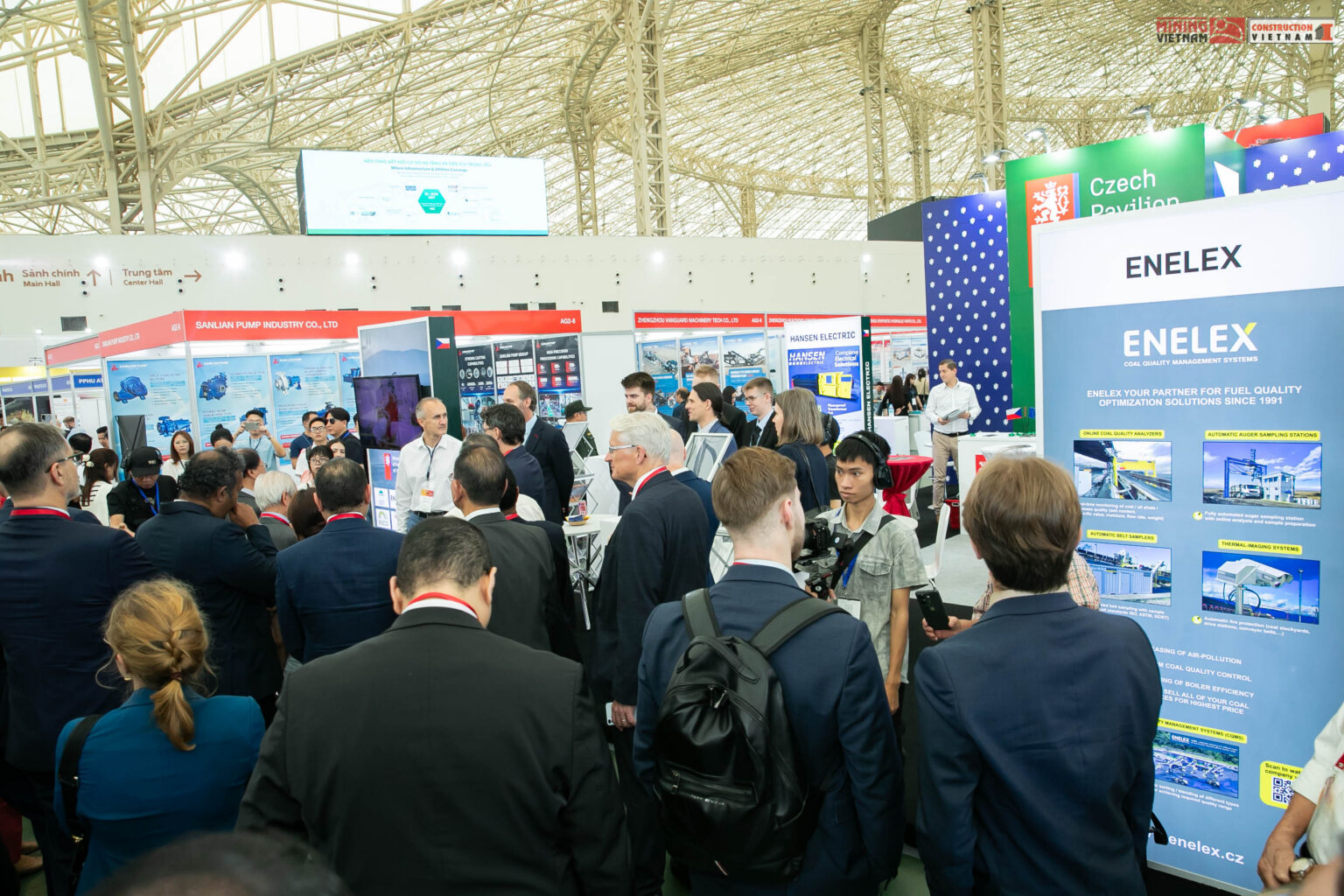
The Mining & Construction Vietnam 2024 exhibition successfully concluded after three dynamic days from April 24th to 26th, 2024, at the National Exhibition and Convention Center (NECC), Hanoi. The event attracted thousands of visitors and brought together many prestigious brands in the mining and construction sectors, offering a valuable platform for business networking, trade opportunities, and the latest advancements in solutions and technologies available in the market.

We look forward to welcoming you at Mining & Construction Vietnam 2026, taking place from April 21st to 23rd, 2026!

Event Highlight

New

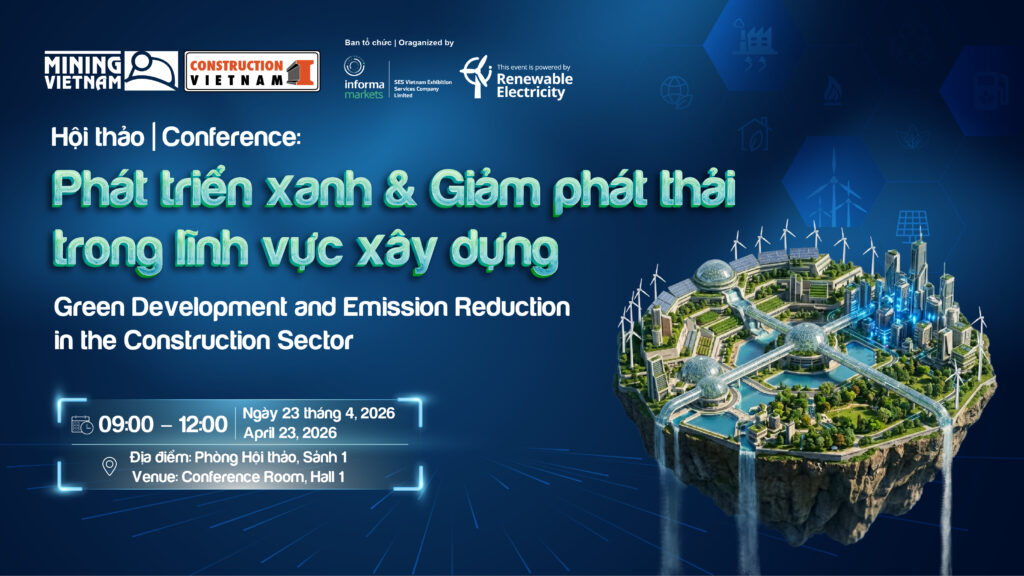
Mining & Construction Vietnam 2026 – A Strategic Meeting Point for the Mining Industry Towards High-Tech and Sustainable Development

According to an article published by Vietnam News (VNS), Vietnam’s amended Law on Geology and Minerals has been introduced to promote high-tech investment, deep processing, and the sustainable development of the mining industry, while establishing a new legal framework to enhance value addition across the entire mineral extraction and processing value chain. The article also highlights the business community’s expectations that the new law will encourage projects applying advanced technologies, alongside the need for clear, transparent, and feasible implementing regulations to ensure effective execution in practice (Source: Vietnam News – VNS).

In this context, Vietnam’s mining industry is entering a critical transformation phase, where enterprises are required not only to comply with the new regulatory framework but also to accelerate technological innovation, optimise mining operations, and invest in deep processing to meet long-term and sustainable development goals.

Connecting Policy, Technology, and the Market

Aligned with this industry transition, Mining & Construction Vietnam 2026 will take place at the National Exhibition Construction Center (NECC)01 Do Duc Duc Street, Me Tri Ward, Nam Tu Liem District, Hanoi, from 21–23 April 2026. The exhibition is expected to serve as a key platform connecting policy, technology, and the market within the mining and construction sectors.

The exhibition will bring together enterprises, organisations, and industry experts across key sectors, including:

  • Mining and mineral extraction
  • Deep processing technologies and materials
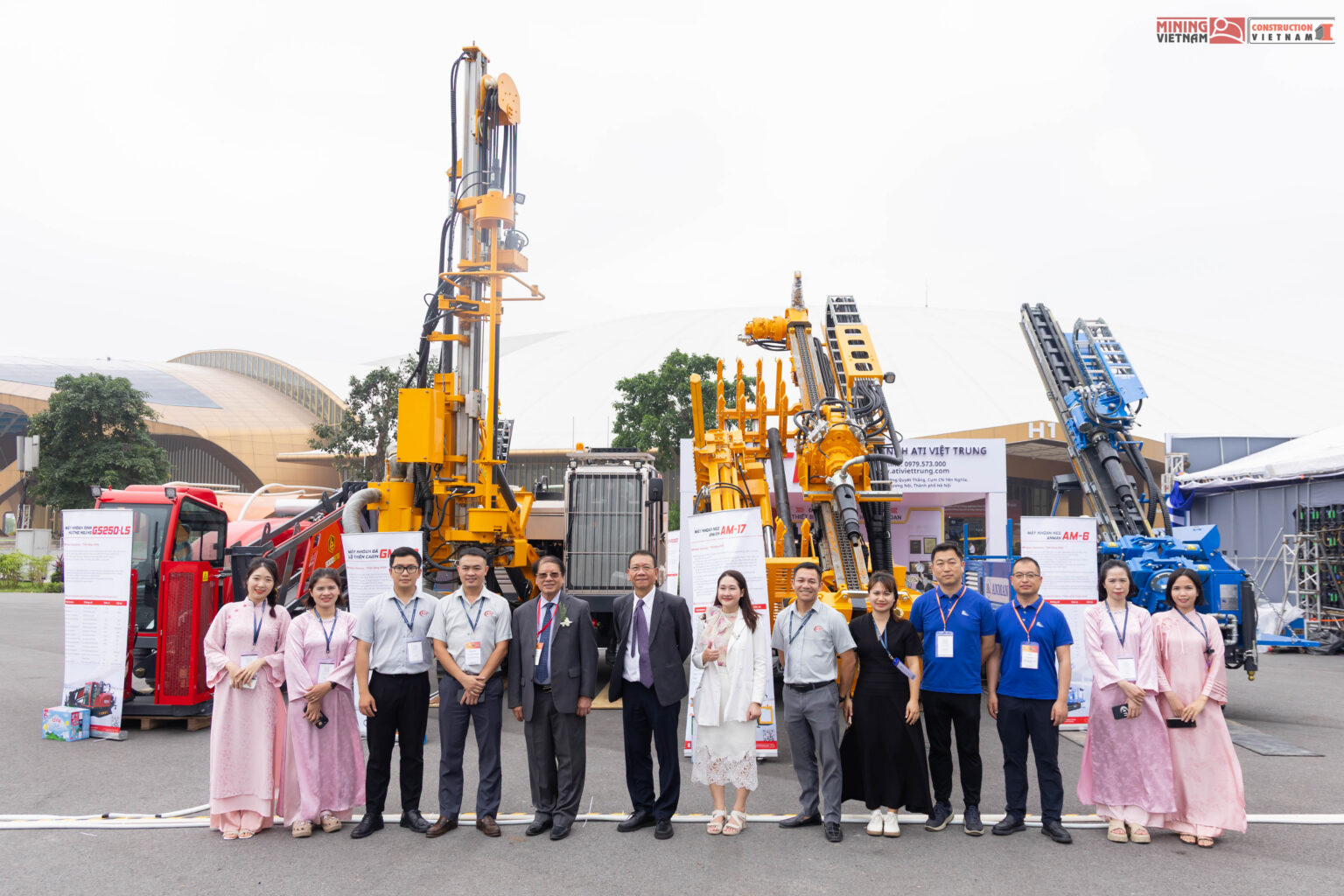
  • Mining and construction machinery and equipment
  • Safety, environmental, and sustainable development solutions
  • Digital technologies, automation, and operational optimisation
 

Mining & Construction Vietnam 2026 will not only showcase advanced technologies and innovative solutions, but also provide opportunities for businesses to:

  • Stay updated on high-tech mining and processing trends
  • Exchange insights on new regulatory and policy requirements
  • Connect with partners, investors, and solution providers
  • Identify solutions to improve operational efficiency, reduce costs, and enhance sustainable value creation

Invitation to Visit and Connect

As the amended Law on Geology and Minerals reshapes the future of Vietnam’s mining industry towards greater transparency, efficiency, and long-term sustainability, Mining & Construction Vietnam 2026 is a must-attend event for:

  • Mining and mineral processing enterprises
  • Construction and infrastructure contractors
  • Technology, equipment, and engineering solution providers
  • Government authorities, industry experts, and professional organisations

We cordially invite businesses and industry visitors to register to visit the exhibition and connect with us to receive further details on the programme, exhibitor lineup, and specialised activities taking place throughout the event.

Visitor Registration Contact:
Ms. Eloise Nguyen
📧 Email: [email protected] 

Mr. Wijack Nguyen
📧 Email: [email protected] 

New

New discovery of 489 “promising” minerals and rare earth sites

The Ministry of Natural Resources and Environment has announced the discovery of 489 new mineral points of various types. Promising mineral areas have been identified, such as rare earth minerals in Bao Thang (Lao Cai) and Lai Chau, as well as gold in Tuyen Quang.

According to information from the Ministry of Natural Resources and Environment, 14 geological mapping and land-based mineral exploration projects have been completed, covering an area of 42,550 km2 (achieving 73.19% of the total land area).

Phát hiện mới 489 điểm khoáng sản, đất hiếm có triển vọng - 1
Headquarters of the Ministry of Natural Resources and Environment (Photo: Phung Minh).

Notably, according to this Ministry, numerous mineral deposits have been discovered and identified, and many of them have been investigated for their resource potential. The state has invested in exploration to determine their reserves. Some of the noteworthy deposits include the Quang Ninh coal basin, apatite in Lao Cai, radioactive minerals, and rare earth elements in provinces such as Quang Nam and Lai Chau. Large-scale metal deposits like the Sin Quyen copper ore (Lao Cai), Cho Don, Cho Dien (Bac Kan) lead-zinc, Ban Phuc nickel mine (Son La), and Bong Mieu gold mine (Quang Nam) have also been explored.

“The results of exploration and reserve determination have been timely licensed for mineral exploitation, effectively serving the country’s economic development across various periods,” stated the Ministry of Natural Resources and Environment.

To date, geological and mineral surveys have been completed over an area of more than 244,000 km2 in the deep-sea region with water depths of 0-100 meters. There have been 24 projects for mineral assessment.

The survey and assessment results have registered 841 mineral points on the map, including the discovery of 489 new mineral points. These include iron ore in Tan An (Yen Bai), graphite in Bao Thang (Lao Cai), gold in Tan Uyen (Lai Chau), Phuoc Son (Quang Nam), kaolin-feldspar in Bao Thang (Lao Cai), Tan Bien (Tay Ninh), and copper ore in Kon Ray (Kon Ra, Kon Tum).

The Ministry of Natural Resources and Environment believes that the survey and assessment of mineral resources have identified promising areas, including rare earth elements in Bảo Thắng (Lào Cai) and Lai Châu, gold in Yên Sơn (Tuyên Quang), copper in Bát Xát (Lào Cai), feldspar in Bắc Yên (Sơn La), landscape stones in Thanh Sơn (Phú Thọ), white sand in coastal provinces of Quảng Bình, Quảng Trị, Thừa Thiên Huế, and decorative stones in Gia Lai.

Some projects have been surveyed and assessed up to a depth of 500 meters, such as the Red River Delta coal mine.

Phát hiện mới 489 điểm khoáng sản, đất hiếm có triển vọng - 2
The rare earth mine in Yen Phu commune, Van Yen district, Yen Bai province (Photo: Van Duc).

Until now, nearly 3,200 mineral exploration licenses have been issued, contributing to the increase in reserves of nearly 40 types of minerals, such as cement limestone with nearly 1.8 billion tons, coal with over 1.2 billion tons, bauxite ore with nearly 900 million tons, and ordinary construction stone with nearly 1 billion cubic meters.

“Many enterprises have invested in innovating technologies and advanced equipment, especially in coal, tungsten, multi-metal, and cement, reducing electricity and energy consumption, minimizing mineral losses, and efficiently utilizing minerals after extraction,” according to the Ministry of Natural Resources and Environment.

In a recent document submitted to the Ministry of Justice, Deputy Minister of Natural Resources and Environment Tran Quy Kien stated that, after 13 years of implementing the Mineral Law, numerous limitations have been revealed, making it no longer suitable and causing difficulties in implementation.

Specifically, there are several issues related to mineral extraction for construction materials, especially sand, riverbed gravel, soil, and rock for ordinary construction materials to serve important national projects or public investment projects. Other issues include the extraction and use of accompanying minerals during the primary mineral extraction process, controlling the mining volume according to each license, and the decentralization and delegation of authority in the management of geological and mineral activities.

Moreover, many laws related to geology and minerals have been amended, supplemented, or newly enacted, but the Mineral Law has not been revised or supplemented to ensure consistency and coherence.

Therefore, the Ministry of Natural Resources and Environment hopes that the new Law on Geology and Minerals will address existing issues and deficiencies, tighten management, promote efficient and sustainable use of minerals, and work towards the goal of sustainable development in this sector.

Source: dantri.com.vn

New

Rare Earth Mining in Vietnam: Industry Overview

Ranked third in the world in terms of its rare earth mining potential, Vietnam could become a major player in rare earth supply chains. Here’s how foreign investors can get involved.

Rare earths are essential elements for the production of various products, including cancer drugs, smartphones, and renewable energy technologies. At the moment, China accounts for 63 percent of the world’s rare earth mining, 85 percent of rare earth processing, and 92 percent of rare earth magnet production.

As the world moves towards a green energy future, and trade friction persists between China and the US, alternative sources of rare earths are in demand. With the rapid advancements in technology, a favorable investment climate, and the world’s third largest supply of rare earths, Vietnam is becoming an attractive destination for investors in the sector.

The global rare earth supply chain

Rare earths are a group of metallic chemical elements that are difficult to find in large quantities, which possess special magnetic and electrochemical properties. Contrary to their name, rare earths are not always particularly rare and can be found throughout the earth’s crust. However, they are often distributed in higher volumes of smaller deposits, making their extraction challenging and expensive.

The global rare earth reserves have been estimated by the American Geological Survey to be 120 million tons. Among these, China possesses 44 million tons, Brazil has 22 million tons, Vietnam is estimated to have 20 million tons, followed by Russia with 18 million tons.

China’s market share and geopolitics

According to several studies, China possesses more than 90 percent of the global rare earth supply. As a result, China has the ability to utilize rare earths as a geopolitical tool. For instance, China threatened to halt rare earth exports to Japan in 2010 over a detained Chinese fishing trawler. Notably this prompted Japanese scientists to explore and evaluate rare earth mines in Vietnam.

This unbalanced situation has raised concerns for customers who depend on China for their rare earths supply, in particular the United States, South Korea, and Europe. Furthermore, prices of rare earths have continued to rise sharply, prompting many countries to revive their own rare earth mining industries or seek alternative sources of supply outside of China.

Vietnam’s rare earth reserves

Vietnam has reserves of approximately 20 million tons of rare earth, which are mainly distributed in the northwest region of the country. These reserves are valued at approximately US$3 trillion, providing a significant opportunity for the nation’s economic development.

Rare earth mining in Vietnam is concentrated in the Northwest and Central Highlands and includes light rare earth groups of hydrothermal origin. Various rare earth mineral deposit points have been identified, such as North Nam Xe, Nam Nam Xe, Dong Pao (Lai Chau), Muong Hum (Lao Cai), and Yen Phu (Yen Bai). There are also some small rare earth deposits scattered along the coast from Quang Ninh to Vung Tau.

The environmental and social impact of rare earth minerals extraction and processing

Rare earth ore mining and processing generates a significant amount of waste, resulting in negative environmental impacts. Waste rock is stored in landfills and is often exposed to the environment, which can cause toxic substances to dissolve and spread in groundwater systems and soil.

China’s experience offers a clear example of the harmful effects of rare earth mining whereby the use of outdated technology in mining has led to serious environmental pollution.

The Yellow River, an important water source for over 150 million people, has been threatened by waste from rare earth mines. In Guangdong province, strong acids leaking from nearby rare earth mining sites have damaged rice fields, streams, and canals.

In response to these environmental and health concerns, China reduced mining output and introduced greater regulation of rare earth mining in 2012.

Challenges faced by Vietnam in rare earth mining and processing

Technology

Vietnamese enterprises lack deep processing technology. Many exploration and processing companies have struggled to access processing technology, presenting a considerable challenge for businesses to penetrate the domestic market and establish exports.

Commitment

Domestic enterprises are not fully committed to investing in research and adopting a more comprehensive strategy towards rare earth ore processing technology. There is a distinct lack of investment, nor is there a comprehensive research and development strategy for the sector.

Mechanisms and policies

Regulatory mechanisms and policies are critical to advancing rare earth mining activities. Resolution No. 10, issued on October 2, 2021, acknowledges the importance of maintaining rare earth mining operations. It does, however, stop short of providing specific mechanisms and policies. Notably, investment in research and international cooperation is necessary for the advancement of the mining of these minerals.

Enterprises are only able to complete 40 percent of the processing needed to make rare earths usable. This is well below the Ministry of Industry and Trade’s minimum export standard of 95 percent.

Major domestic players in Vietnam’s rare earths industry

The Vietnam Investment and Construction Joint Stock Company (CAVICO Vietnam) and the Vietnam Institute of Radiation Technology recently signed an agreement for the research, development, and construction of a scandium rare earth deep processing plant. This agreement is expected to pave the way for the development of the rare earth industry within Vietnam.

Currently, CAVICO Vietnam is operating a mining and processing facility in Laos, which covers an area of 80 km2 in Bolikhamxay province. This is under an investment license permitting the mining and processing of nickel, iron, cobalt, gold, and silver ores.

International firms operating in Vietnam’s rare earths industry

Collaborating with Japan, the General Department of Geology and Minerals has discovered rare earth deposits in Lao Cai province alongside deposits in Yen Bai, Ha Giang, Cao Bang, Lang Son, Nghe An, Kon Tum, and Lam Dong.

In December 2014, the Ministry of Natural Resources and Environment granted a license to Lai Chau Rare Earth Joint Stock Company and their Japanese partner to extract rare earth ores from a site in Lai Chau province. This mine is believed to hold the highest volume of reserves in the country and is capable of large-scale industrial exploitation.

Aside from Lai Chau, the ministry has also granted licenses for rare earth mining in Yen Bai province. Although this mine has smaller reserves, it is as yet untouched and may be highly profitable if exploited effectively and efficiently.

In 2022, Vietnam Rare Earth Joint Stock Company signed an agreement on rare earth export with ASM & KSM Metal Co., Ltd and the government of Chungcheongbuk-do province in South Korea. This will see the two companies work together to develop mining operations in Yen Bai province. It is estimated that the site contains 30,000 tons of rare earth reserves.

Government policies and regulations

Resolution No. 10-NQ/TW, issued on February 10, 2022

This resolution outlines strategic directions for the geology, minerals, and mining industry up to 2030. The resolution encompasses four key objectives.

Geological and mineral resources are considered vital resources for socio-economic development and need to be fully planned, investigated, and explored.

Basic geological and mineral surveys must be conducted proactively and serve as a foundation for formulating strategies, master plans, and plans for socio-economic development.

Planning management, basic geological and mineral investigation, exploration, exploitation, processing, and use of minerals must have a strategic vision to meet the requirements of socio-economic development in the short, medium, and long term.

There must be an effective connection between planning, investigation, exploration, and exploitation in processing and using minerals.

The Law on Minerals

The Law on Minerals covers various aspects of mineral activities in Vietnam, including general provisions, mineral strategies and planning, and responsibilities to protect unexploited minerals. There are also regulations on basic geological investigation, environmental protection, mineral exploration, exploitation, and financing.

Vietnam’s international commitments to foreign investment in mining

CPTPP

The Comprehensive and Progressive Agreement for Trans-Pacific Partnership (CPTPP) outlines conditions for foreign investment in the mining sector in Vietnam. Essentially, approval for foreign investment will only be granted if the investment project is deemed to bring net benefits to Vietnam.

Various factors are taken into account. This includes: the project’s impact on economic activity, job creation, equipment and services made in and exported from Vietnam, the extent and importance of Vietnamese participation in the project, productivity, economic efficiency, the technology to be developed in Vietnam, product innovation, competition, and the compatibility of the project with other national policies.

VKFTA and EVFTA

The Vietnam-Korea Free Trade Agreement (VKFTA) and the European Union-Vietnam Free Trade Agreement (EVFTA) allow for the establishment of joint ventures with a foreign capital contribution not exceeding 51 percent or enterprises with 100 percent foreign investment capital, according to Vietnam’s Foreign Investment Agency.

Investment opportunities in Vietnam’s mining and rare earth minerals industry

In 2022, Vietnam was the recipient of 108 foreign direct investment (FDI) projects in the mining industry, amounting to a combined registered capital of US$4.9 billion.

Vietnam’s mining industry is diverse, with rare earth minerals becoming an increasingly important focus for the sector. This is driven by reports that the country has one of the largest reserves of rare earth minerals in the world.

Furthermore, Vietnam also has a favorable geographical location, with access to key markets in the region, such as China, Japan, and South Korea, which are major importers of rare earth minerals.

The Vietnamese government has identified the mining industry, including the rare earth minerals sector, as a priority for development, and has introduced measures to attract foreign investment. These measures include tax incentives, streamlined procedures for obtaining mining licenses, and the establishment of industrial zones dedicated to mining and processing.

Investors looking to invest in Vietnam’s mining industry can benefit from the country’s strategic location in Southeast Asia, major investments in infrastructure, and a skilled and low-cost workforce.

Source: Vietnam Briefing

Why to visit

International Exhibition

Mining & Construction Vietnam is a leading trade exhibition for the mining and construction industries in Vietnam. The exhibition serves not only the domestic market but also the international market, attracting more than 180 exhibiting companies from 18 countries and territories worldwide.

Connect with Industry Key Players

In-depth International Conferences

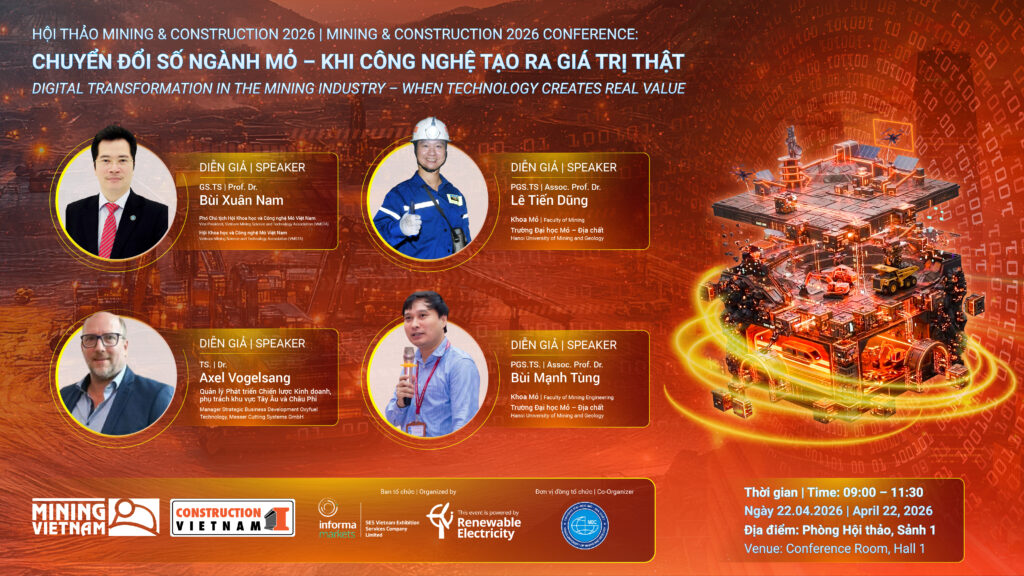
Join our conferences to gain valuable knowledge through expert-led seminars, business networking events, and in-depth technical presentations. All activities take place exclusively at Mining & Construction Vietnam.

Industry Trend Updates

Inspire new ideas and innovative initiatives to help your business achieve outstanding growth within the industry.


Why to exhibit

Connect with Strategic Partners

Meet top industry leaders, experts, and potential partners in Mining & Construction. This is a golden opportunity to expand your network, establish valuable business relationships, and engage directly with key customers.

Boost Brand Visibility

Position your company as an industry leader by showcasing your latest technologies and innovative solutions. Strengthen your market presence, enhance brand recognition, and stand out from the competition in this rapidly growing sector.

Stay Ahead of Market Trends

Gain firsthand insights into industry innovations and emerging trends by networking with experts, participating in in-depth discussions, and exploring cutting-edge solutions. The exhibition offers a valuable chance to gather real-time customer feedback, understand market needs, and seize business opportunities in Vietnam.

Stay Ahead of Market Trends

Gain firsthand insights into industry innovations and emerging trends by networking with experts, participating in in-depth discussions, and exploring cutting-edge solutions. The exhibition offers a valuable chance to gather real-time customer feedback, understand market needs, and seize business opportunities in Vietnam.

Join Us

Unleash market potentials

Checkboxes

I agree to the Terms of Use and Privacy Policy

Admission Policies

Exhibit Support

HANOI OFFICE

Mr. Milton Bui

INTERNATIONAL SALES ENQUIRIES

Ms. Vicky Vu

Testimonial

Media Partners

Edit Template